Posts

Back to School: What to Change? What to Keep?

Image
IT'S HERE!!! If you are like me, you feel a little sad about the end of summer but also super excited for a new school year. I love the new school supplies, fresh start, classroom decorating , meeting new kids, and a chance to try new things! I wanted to put together a post that compiled all of my favorite past posts related to stuff teachers think about at the start of a new school year. First, I like to sit down and write out my goals . I think about what I want to keep and what I might want to change . There are several things that you might have done in the past that you might want to rethink. For example, grading , getting rid of your teacher desk , or even how you speak about gender in your classroom . How are you going to arrange your classroom? How will you make seating charts that encourage collaboration ? Think about small changes you could make that will have a big impact. Here are a few . Think about how you might want to treat mistakes in your clas...

First Day of School: "Me In Numbers"

Image
One way to introduce yourself to a new group of students is to do "Me In Numbers."* Here's how it works:  1. Make up a few questions about yourself. List the numbers (out of order) at the bottom. Have some easy to figure out and others that could be several of the options. For example, my daughter is probably not 38 or 1884 years old... but she could be 2, 3, or 14.  2. Display to the class and have them right down their guesses for each statement. Each number at the bottom is used once. (sometimes I like to set it up that they are going to have a "quiz" on this first day. I have a smile on my face so they don't get too nervous, and then obviously when I show them they questions they know it's not a graded quiz but just for fun). 3. Go over the answers as they "grade" their work. As you go over the answers, share a bit about yourself. I usually have a slide or two to go with each answer with some pictures of my family, cats...

Kaleidocycles: How To

Image
via GIPHY I started teaching in 2004. That first year, I found a blank net of a "Kaleidocycle" online. Back then, there weren't as many online tutorials! In fact, this one didn't even come with any instructions. So, I sat down with a few copies and started cutting and gluing until I figured it out. I tried it with my 8th grade students and it was a hit! The next year I tried it again with more middle schoolers and, again, everyone loved it. I continued to use it as one of my go-to end-of-the-school-year lessons . So, in total, I believe I have taught over 1000 students how to make Kaleidocycles ! This copy of a copy is the only lesson that I have saved from that first year of teaching and that I have used consistently, every year, since I first started. It really does hold a special place in my teacher heart. So... how do you make it?! First, download the net . I suggest printing it on card stock. I made a little tutorial video to help you get started. ...

Responsible Data

Image
I think data is important. I even recently presented about " Data Driven Coachin g" at ISTE! I've been thinking a lot about how we use data to tell a story and the implications it has for teachers and our students. One thing that really gets me upset is when I see data being reported (usually visually) in misleading ways. Sometimes I think people just don't realize that they are creating something misleading, while other times things are done to intentionally exaggerate what is actually going on. This TED-Ed video explains this really well: So when I came across this tweet, I immediately looked at the y-axis. I noticed that the % was "zoomed in" making it look like engagement in high school was practically 0%, even though it was 44%. Now, 44% isn't great. And the overall trend of declining engagement is worrisome. But, the math teacher in me was just a little annoyed at the misleading graph. This is OUR problem. We must do something to combat...

Math Friends Ask: What is ISTE?

Image
I went to ISTE last week and I felt like I was cheating on my math friends. WHAT IS ISTE? First, ISTE stands for International Society for Technology in Education. They have a big annual conference every summer. This year it was in San Antonio and I was lucky enough to get to present and attend. If you have never heard of ISTE, you aren't alone. Despite the fact that this conference is HUGE, many educators don't even know it exists. (I didn't until a few years ago.) And I saw on Twitter a few math educator friends asking what #ISTE17 stood for because they were seeing it in their newsfeed. And, to make it even harder, I looked at ISTE's website and had to dig a bit to even find it all spelled out! So, why hadn't I heard of ISTE until recently? I've connected mostly with the math ed crowd on social media and engage with the fine folks in #MTBoS often. I just don't hear much about tech stuff as it relates to math... with the big exception being fo...

End of the Year: Reflections & Celebrations

Image
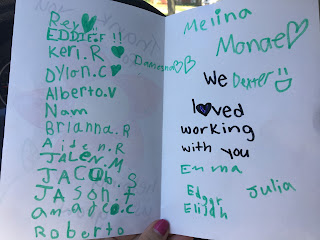
The end of the school year is a natural time for reflection and celebrations. Around the 8 schools in my district, I've stopped in many classrooms these past few weeks to sweaty kids just back from "Park Day" or tired teachers just back from a field trip. I've seen high fives, hugs, and dance parties. One of the classrooms I worked with the most this year even gave me a handmade card and flowers on our last day working together! Taking the time to recognize the hard work of others and letting them know the impact they had on you is important. Not only does it make someone feel good, but it's also important professionally to know that your work matters. One of the most impactful "gifts" I ever got was a card from 3 teachers I mentored where they wrote down "Annie-isms" that they called "Words of Wisdom." Just knowing that they remembered things I said to them during our work together meant so much to me. More than tha...

Using Desmos with Primary Students!

Image
Like so many math teachers , I LOVE Desmos! I tell everyone who will listen that they should be using it. I used it myself when I was in the classroom teaching middle schoolers. The graphing calculator is such a fabulous tool and the Desmos created activities are so engaging and awesome. As I've learned more about activity builder and moved into a K-8 instructional coaching role, I started to think about how it could be used in younger grades. I love the power of card sorts for all levels, so having that option in Desmos really sets it apart from some other platforms that teachers might already be using like ClassKick and Formative (which I love as well!). Recently, I was asked to model a few lessons in classrooms. I started in a 5th grade classroom, and it seemed like a good fit to use Desmos as part of an activity. I included a card sort as well as some open response questions. It went well! Next, I was headed to a 1st grade classroom. They were learning ...